Aviana Adams
The Nutcracker Through the Years: Reflections with Ariana Chernyshev
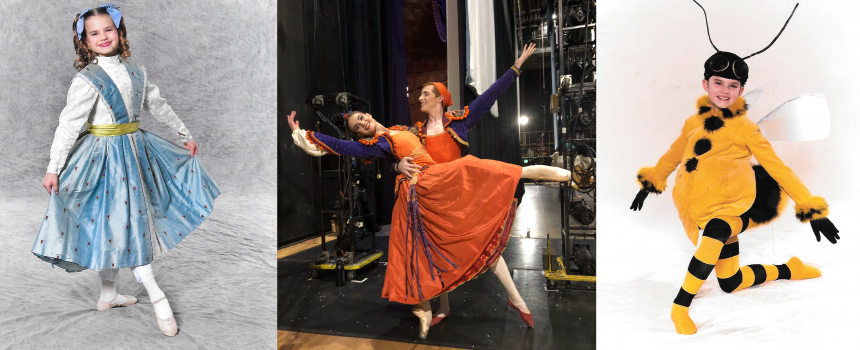
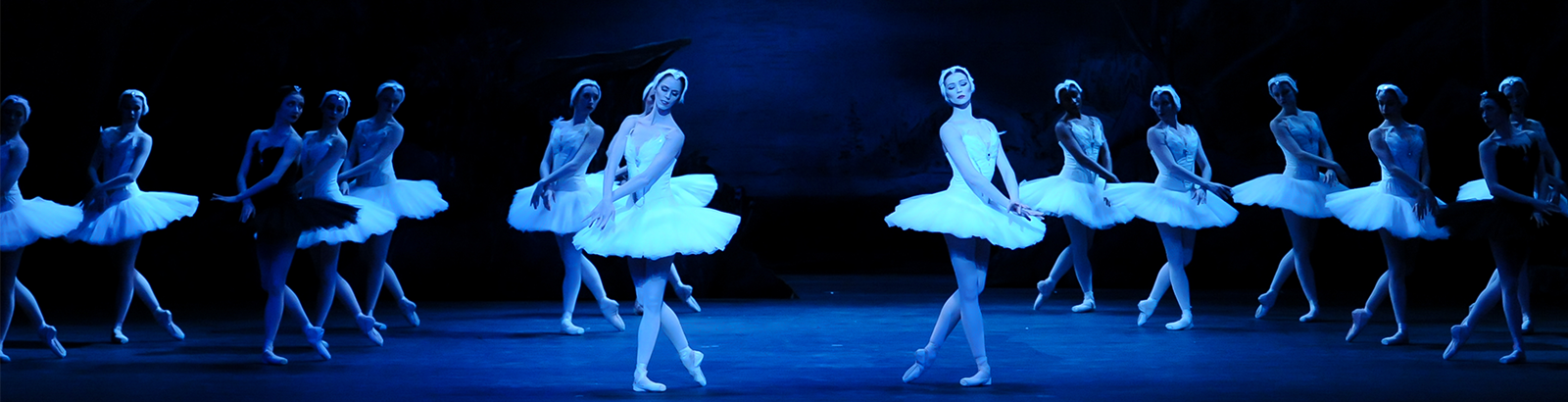
At PBT School, students have the opportunity to perform onstage in PBT’s production of The Nutcracker every season, starting as young as age 8. Students who train in the School over the course of many years are therefore able to perform multiple different roles in the holiday production as they grow.
Ariana Chernyshev, current company apprentice who was trained from Pre-Ballet all the way through the Graduate program at PBT School, reflects on her own journey with PBT’s The Nutcracker that began nearly 14 years ago.
Can you remember your first Nutcracker experience? What role did you dance? Were you excited, nervous, etc.?
My first experience with The Nutcracker was in 2008, and it was absolutely unforgettable! I was the Little Party Girl, which was an honor since only two girls from the youngest age division are selected for this role. There is a good amount of acting and the rehearsal process was very exciting since the other party children were a few years older. My ballet bestie was the Little Party Girl for the other cast, and we would write notes back and forth to each other in the book we colored in onstage. I didn’t feel nervous until I was backstage – this was my first production on a big stage with a professional company and everything seemed larger than life. I was fully enraptured by the sets, costumes, lights and the older dancers having their final moments to practice before the show. After my first entrance, my nerves transformed into pure elation and that first show of The Nutcracker became the memory that I hold in my heart as the moment I knew I would do anything to become a ballerina.
What roles have you danced in The Nutcracker? Which ones have been your favorites and why?
In Terrence S. Orr’s The Nutcracker, I have danced the roles of Little Party Girl, Soldier, Bumblebee, Mouse, Black Sheep, Party Girl, Clown, Young McTavish, Clara Doll, Aviary, Flower, Snowflake and Spanish. Little Girl in the party scene will definitely be a role I always treasure since it was where I truly fell in love with performing, but I also loved getting to shake my stinger at the end of the show as a Bumblebee! Mouse was another one of my all-time favorite roles, as they are quite cheeky. As a young dancer performing child’s roles in The Nutcracker, I always wanted to be a Snowflake. I thought that the older dancers were so beautiful, graceful and powerful, especially with their gorgeous crowns and fluttery tutus. The magic of performing as a Snowflake now is something I don’t take for granted. Also, the camaraderie of the Snowflakes really adds to the enchantment of each performance.
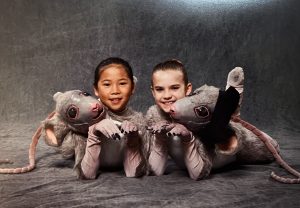
What was your most recent Nutcracker role? How have you changed as a dancer since the first time you took the stage for The Nutcracker?
This past Nutcracker season, I danced as a Snowflake, Flower and understudied for Spanish. Last-minute casting adjustments allowed for me to perform in the Spanish, including an emergency during intermission! The ability to be ready to step in with just a moment’s notice is incredibly useful in the world of the performing arts and it was exciting for me to be able to challenge myself in that way. I’ve come a long way as a dancer from my first Nutcracker, and have gained a lot of crucial performance experience.
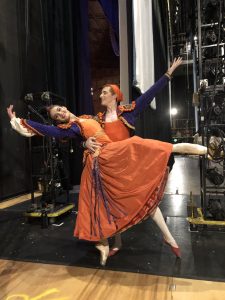 How has your experience dancing in The Nutcracker affected your growth as a dancer and performer? Has it prepared you for future performances?
Dancing in The Nutcracker over the past 14 years has led me to fall in love with ballet, expand my artistry and push my body physically. From my very first performance, I knew that ballet was going to be one of my greatest passions in life. The multiple children’s roles I began with were the introduction of my development as an onstage performer. As my roles became more physically strenuous, including the addition of pointe shoes, Nutcracker became a time for me to practice managing the stress on my body. This self-management has proven to be absolutely invaluable in my time as a dancer, especially during PBT’s most recent performances of Swan Lake with the PBT Orchestra. As both a dancer and a performer, The Nutcracker has become a benchmark of my growth and progress.
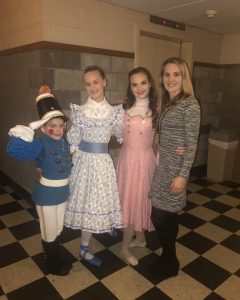 What is your favorite memory from all of the Nutcracker seasons you’ve taken part in?
Both of my little sisters have danced at Pittsburgh Ballet Theatre School and have performed in the company’s production of The Nutcracker, and my mother (Toma Smith) works with the children for roles in the battle scene and Act II. One of my favorite memories is a performance that we were all a part of!
Don’t miss your chance to experience the magic of The Nutcracker this holiday season, running December 9-28 at the Benedum Center!
[Buy Tickets button: https://pbt.culturaldistrict.org/production/78322/the-nutcracker]
Interested in enrolling your child at PBT School so they can enjoy performance opportunities like this? Click the link below to learn more!
[Learn More button: https://pbt.org/pbt-school/join-our-school/]
Thank you to our sponsors, Highmark, Giant Eagle, Clearview Federal Credit Union for their support of The Nutcracker.
Pittsburgh Ballet Theatre Artistic Director Susan Jaffe Announces Move to American Ballet Theatre

Pittsburgh Ballet Theatre Artistic Director Susan Jaffe Announces Move to American Ballet Theatre
Effective December 2022, the Former ABT Principal Dancer Will Return to the NYC Company as Artistic Director
PITTSBURGH, PA (May 9, 2022) – Pittsburgh Ballet Theatre Artistic Director Susan Jaffe announced this morning that she has been named Artistic Director of American Ballet Theatre, where she spent more than 30 years of her career. She will begin her new role at ABT in December. PBT remains in an excellent position to further realize the company’s vision and mission.
“What a profound honor it is for me to come back home to lead the artistic helm of American Ballet Theatre,” says Ms. Jaffe. “I have experienced so many iterations of my career at ABT. I was a student, second company member, main company member, teacher in the school, advisor to the chairman and a director of repertoire for this company. However, I wouldn’t have been able to take on this new challenge without everything I accomplished at PBT. It is an outstanding organization.”
“We are grateful for the contributions Susan has made to PBT,”says PBT Board Chair Mary McKinney Flaherty. “I look forward to working with the executive search committee to identify the next artistic director.”
Ms. Jaffe is PBT’s sixth artistic director in the company’s 53-year history. From the organization’s founding in 1969, PBT has evolved into a critically acclaimed company with international reach.
Her tenure featured many artistic achievements, including:
● Choreographing a new Swan Lake that debuted last Friday
● Stewarding PBT’s presence during the COVID-19 pandemic and spearheading
the creation of a robust library of collaborative and innovative digital programs,
including Fireside Nutcracker which won three Telly Awards
● Launching the Open Air: A Series in Celebration of the Performing Arts outdoor
festival in partnership with executive director, Harris Ferris, where she debuted
Bolero, her first original piece of choreography for PBT, which was also
performed at the Carnegie Museum of Art’s Hall of Sculpture
● Guiding a successful return to the stage with Season Premiere with the PBT
Orchestra in October 2021
● Promoting innovative and classical works by leading choreographers, including a
showcase of five female choreographers at Here + Now in March 2022
● Launching a collaborative program between Pittsburgh Ballet Theatre School and
Point Park University in which graduate students of PBT School can receive
academic instruction from Point Park and earn a B.F.A. in dance in two years